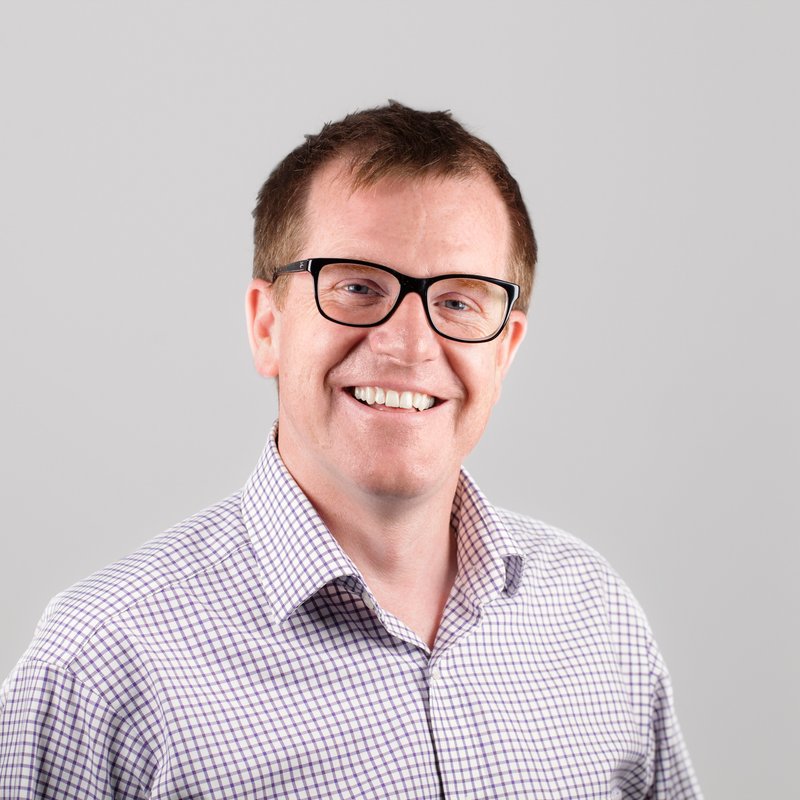
Simon
Bullers

Technology leadership. Transformation at scale.

I am a financial-services technology executive with a career spanning central banking, retail banking, insurance, asset management, entrepreneurship and engineering.

Today I am Chief Technology Officer at the Bank of England.

Previously, my career has taken me through Virgin Money, Hastings Direct, Lloyds Banking Group, BlackRock and Barclays Global Investors, alongside building RedPixie.

I have spent much of that career helping complex organisations change while continuing to operate safely, reliably and at scale.

For me, technology transformation has never really been about the technology.

It is about understanding where an organisation needs to go, creating the environment in which great people can succeed, and then working backwards from the destination.

Work backwards from the destination, not forwards from the status quo.

Simon Bullers — Chief Technology Officer, Bank of England

Selected Impact

A career measured by outcomes

90,000

Enterprise scale

Technology transformation across an organisation of approximately 90,000 colleagues at Lloyds Banking Group.

~90%

Reduction in major incidents

Major incidents reduced from 753 to 75 during the first year of the Hastings Direct transformation.

1.6×

Application performance

Overall application performance improvement delivered during the Hastings technology transformation.

4–5×

Faster customer processes

Significant improvement in the performance of selected critical customer journeys.

30+ years

Financial services & technology

Experience spanning financial markets, infrastructure, engineering, entrepreneurship, banking, insurance and technology leadership.

FBCS

Fellow of BCS

Recognition of leadership and contribution to the technology profession.

About

Technology has changed. The fundamentals haven’t.

I started my career in financial services before increasingly moving towards technology, engineering and ultimately technology leadership.

That background has been useful.

It means I tend not to see technology as a separate function of an organisation.

Technology, operations, customers, risk, people and economics are interconnected.

Over the years I have worked inside some exceptionally complex organisations and also built businesses of my own.

I have worked in global investment management, founded and grown a technology company, led engineering inside one of Britain’s largest banks, transformed technology in insurance, worked on AI and conversational banking, and today serve as Chief Technology Officer of the Bank of England.

The technology has changed enormously during that time.

  • Mainframes became distributed systems.
  • Physical infrastructure became virtual.
  • Datacentres became cloud platforms.
  • Applications became services.
  • Automation became artificial intelligence.

Yet successful transformation still depends on remarkably familiar things:

  • Clear outcomes
  • Good engineering
  • Strong teams
  • Commercial judgement
  • Operational resilience
  • Curiosity
  • And the willingness to challenge assumptions

I remain deeply interested in technology itself, but increasingly fascinated by the organisations and people around it.

Because the hardest technology problems are rarely purely technical.

What I Do

Building technology organisations that can change

My work tends to sit where several difficult things meet.

Technology Strategy

Creating a clear connection between organisational ambition and technology investment.

Strategy should explain what we are trying to achieve and the choices required to get there — not simply provide a list of technologies.

Engineering

Building engineering capability that enables organisations to move faster without sacrificing reliability or control.

Good engineering is as much about culture, ownership and decision-making as it is about code.

Transformation

Transforming complex environments while the organisation continues to operate.

The interesting transformations are rarely greenfield.

They involve decades of technology, organisational structures, regulation, suppliers, data and customer expectations that cannot simply be switched off.

Operational Resilience

Technology must work when it matters.

Resilience should be engineered into platforms, operating models and organisational culture rather than treated as something tested after the technology has been built.

Artificial Intelligence

AI is becoming another fundamental technology capability.

The interesting question is no longer whether organisations will adopt AI.

It is how they do so responsibly, securely and in ways that genuinely improve outcomes.

People & Culture

Almost every successful transformation I have seen has ultimately been a people transformation.

Technology gives organisations new possibilities.

People determine whether those possibilities become reality.

Career

A career across financial services and technology

2025 – Present Current

Bank of England

Chief Technology Officer

I joined the Bank of England as its first Chief Technology Officer.

The Bank occupies a unique position at the centre of the UK financial system and presents a fascinating technology challenge: combining innovation and modern engineering with the resilience, security and responsibility required of a central bank.

My focus includes technology strategy, transformation, engineering capability, operational resilience and the responsible adoption of emerging technologies including AI and automation.

The opportunity is not simply to modernise technology.

It is to continue building the capability of the organisation to adapt as technology itself changes.

2023 – 2025

Virgin Money

Technology Leadership

At Virgin Money I worked across technology and the wider organisation during an important period of transformation.

My work included artificial intelligence, automation, conversational banking, colleague technology and new ways of working, alongside strategic relationships with organisations including Microsoft and IBM.

One of the most interesting areas was conversational banking and Redi.

The experience reinforced something I strongly believe:

The most useful innovation happens when business and technology teams stop behaving like separate organisations.

2021 – 2023

Hastings Direct

Chief Technology Officer

At Hastings Direct we undertook a broad transformation of technology across cloud, infrastructure, workplace, core insurance systems, contact centre, data and engineering.

We deliberately avoided treating this as an infrastructure migration.

The objective was to improve how the organisation operated.

During the transformation:

  • Major incidents fell by approximately 90%, from 753 to 75.
  • Application performance improved by approximately 1.6×.
  • Some important customer processes became four to five times faster.

Core insurance workloads were migrated to Microsoft Azure and the organisation moved towards a modern cloud operating model.

But the most important transformation was cultural.

Technology improves quickly when people understand where they are going and have the authority and capability to get there.

Lloyds Banking Group

Engineering & Technology Leadership

Lloyds provided the opportunity to lead transformation at enormous scale.

The organisation had approximately 90,000 colleagues, a huge technology estate and the complexity that naturally develops inside a major financial institution over decades.

A significant focus was modernising colleague technology and moving away from traditional multi-year platform migrations towards an evergreen engineering model.

Our work with Microsoft ultimately became part of the development and early enterprise adoption of Microsoft Managed Desktop.

I subsequently presented the transformation with Microsoft at Ignite and discussed the programme on Microsoft’s The Shiproom.

It was during this period that one of my favourite transformation principles became particularly clear:

Work backwards from the destination, not forwards from the status quo.

If you begin with today’s constraints, you tend to build a slightly improved version of today.

Sometimes transformation requires starting somewhere else entirely.

RedPixie

Founder & Chief Executive Officer

RedPixie was one of the most important experiences of my career.

Building a technology company teaches you things large organisations sometimes allow you to forget.

  • Customers matter.
  • Cash matters.
  • Talent matters.
  • Culture matters.

And ultimately someone has to buy what you are building.

We grew RedPixie as a specialist technology business with a strong focus on financial services and developed a close strategic relationship with Microsoft.

The business later combined with Cloudamour, after which I moved from Chief Executive to President.

Building a company permanently influenced the way I approach executive technology leadership.

Technology decisions are business decisions.

BlackRock & Barclays Global Investors

A significant part of my earlier career was spent at Barclays Global Investors and subsequently BlackRock.

I worked across infrastructure, architecture, engineering and technology innovation in global investment management.

Those years gave me experience across large distributed environments, virtualisation, financial markets, global teams and emerging technology.

More importantly, they gave me the opportunity to understand financial services from the inside.

That experience has influenced almost everything I have done since.

How I Think

A few principles I’ve collected along the way

  1. Work backwards from the destination.

    Incremental thinking has its place.

    Transformation sometimes requires deciding where you genuinely want to end up and then working backwards to determine what must change.

  2. Cloud is not a strategy.

    Neither is AI. Nor was virtualisation before them.

    Technology creates possibilities.

    Strategy determines which possibilities matter.

  3. Resilience is an engineering discipline.

    Reliability cannot be inspected into a system at the end.

    It begins with architecture, engineering practices, ownership and culture.

  4. Transformation is about people.

    Organisations do not transform because somebody produces a transformation roadmap.

    They transform when people understand the destination and believe they can influence the journey.

  5. Suppliers should become partners — or remain suppliers.

    The best technology relationships are built around shared outcomes.

    A long contract does not automatically create a strategic partnership.

  6. Complexity accumulates quietly.

    Every reasonable technology decision has the potential to become tomorrow’s legacy.

    Architecture is partly the discipline of managing tomorrow’s complexity today.

  7. Curiosity compounds.

    Technology careers are unusually unforgiving of people who stop learning.

    I have always enjoyed understanding how things work.

    That remains one of the most valuable habits I have.

AI

Artificial intelligence without the theatre

Artificial intelligence will change how organisations operate.

That seems increasingly difficult to dispute.

What interests me is not the endless cycle of AI demonstrations.

It is what happens when AI becomes part of the real operating environment of a large organisation.

  • How does it interact with data?
  • How do we secure it?
  • How do people work alongside it?
  • How do organisations govern thousands of automated capabilities rather than a handful of applications?
  • How do we understand decisions made partly by machines?

And perhaps most importantly:

What becomes possible when the marginal cost of certain forms of knowledge work changes dramatically?

Those are organisational questions as much as technical ones.

And we are only beginning to answer them.

“The prize is not fewer humans. It is better‑equipped humans.”
Simon Bullers

Engineering & Transformation

Modern technology. Old organisations.

Most large organisations were not designed.

They evolved.

  • New systems were added.
  • Companies were acquired.
  • Regulations changed.
  • Products appeared and disappeared.
  • Teams reorganised.
  • Suppliers came and went.

Decades later, technology architecture often represents the accumulated history of all those decisions.

That is why large-scale transformation is interesting.

It is rarely about selecting the newest technology.

It is about simplifying complexity while maintaining the organisation’s ability to operate.

I have spent much of my career working in exactly that environment.

Speaking & Recognition

Sharing what we’ve learnt

I have had the opportunity to speak about technology transformation, engineering and leadership at industry events and with organisations including Microsoft. Highlights include:

Microsoft Ignite

Discussing enterprise transformation and Microsoft Managed Desktop at Lloyds Banking Group.

Microsoft — The Shiproom

A conversation about transformation, technology leadership and working backwards from the destination.

Financial Services & Technology Events

Speaking across banking, cloud, infrastructure, AI and engineering throughout my career.

Computing IT Leaders 100

Recognised among UK technology leaders.

Fellow of BCS

Fellow of the Chartered Institute for IT.

Certified Ethical IT Professional

Reflecting the importance I place on responsible technology leadership.

Selected Writing

Ideas, observations and things I’ve learnt

Technology Leadership

Thoughts on transformation, engineering, culture and leading technology organisations.

Artificial Intelligence

Practical observations on AI adoption rather than predictions designed to generate headlines.

Financial Services

Technology, resilience and transformation inside complex regulated organisations.

Engineering

Cloud, architecture and how large technology environments evolve.

Personal

Occasional pieces about careers, learning, music, engineering and things that interest me.

Outside Work

Curiosity doesn’t stop at the office door.

A lot of what interests me outside work still involves creating, building or understanding something.

Music

I write and produce my own music, increasingly using AI as part of the creative process.

What began as experimenting with generative technology has become a genuine creative outlet — developing ideas, writing lyrics, shaping arrangements and producing complete tracks across very different styles.

AI makes creating music accessible in completely new ways.

But generating something is the easy part.

Deciding what you want it to become — and whether it is actually any good — remains very human.

That intersection of technology and creativity is a large part of what makes it interesting to me.

Cars & Engineering

Cars have long been one of my interests.

Part engineering, part technology and part completely irrational emotional attachment to complicated machinery.

The transition towards electric vehicles is particularly interesting because it brings together mechanical engineering, software, energy, infrastructure and computing.

I enjoy the engineering almost as much as the driving.

Motorsport & Railways

For a number of years, motorsport was one of my main interests outside work.

In 2012, I swapped motorsport for railways and spent time with a model engineering society, including driving trains and signalling — practical engineering of a rather different kind.

There is something particularly satisfying about engineering that you can actually see moving.

And unlike enterprise technology, when something on a railway breaks there is at least a reasonable chance somebody has a sufficiently large spanner to fix it.

Reading

I read constantly.

My library has grown into hundreds of books across technology, science, history, economics, biography, leadership and fiction.

I don’t think reading automatically makes anyone wiser.

But regularly encountering other people’s ideas is a remarkably effective way of discovering that some of your own assumptions might be wrong.

Explore what I’m reading

Curiosity

The common thread is probably curiosity.

  • Technology
  • Companies
  • Music
  • Cars
  • Engineering
  • History
  • Machines
  • People

I like understanding why things work.

And particularly why sometimes they don’t.

Reading

What I’m reading

I read across technology, leadership, economics, history, science, biography and fiction.

The Library

Hundreds of books and counting.

For anyone sufficiently curious, the complete library is available here.

Explore the complete library

A Short Biography

Simon Bullers

Simon Bullers is Chief Technology Officer at the Bank of England and a technology executive with more than three decades of experience across financial services and technology.

His career has included senior leadership positions at Virgin Money, Hastings Direct and Lloyds Banking Group, following earlier roles at BlackRock and Barclays Global Investors.

He was also founder and CEO of RedPixie, a specialist technology company with a strong focus on financial services.

His work has included large-scale technology transformation, engineering, cloud, operational resilience, artificial intelligence and organisational change.

Simon is a Fellow of BCS and a Certified Ethical IT Professional.

Outside work, he writes and produces music using AI as part of the creative process, reads extensively and has interests in cars, engineering and technology. His past interests have also included motorsport and practical model engineering.

He lives in the UK.

Contact

Good conversations usually start with an interesting problem.

I enjoy exchanging ideas with people working on difficult problems in technology, financial services, engineering, transformation and leadership.

The best way to reach me professionally is through LinkedIn.

Technology changes.

Organisations change.

Careers certainly change.

Curiosity is rather more persistent.

Simon Bullers

Technology · Engineering · Financial Services · Transformation